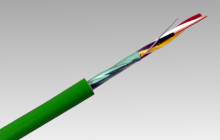
If you are planning an electrical or communications installation and have wondered whether you need a shielded cable or whether an unshielded one will be enough, you are not alone. At Cervi, we have been answering this exact question for more than 50 years.
The short answer is: no, shielding is not always necessary. But when it is needed, doing without it can be very costly.
An unshielded cable is not a lower-quality cable. It is simply a cable designed for environments where interference is not a problem. Shielding exists for places where it is.
What is the real difference between a shielded and an unshielded cable?
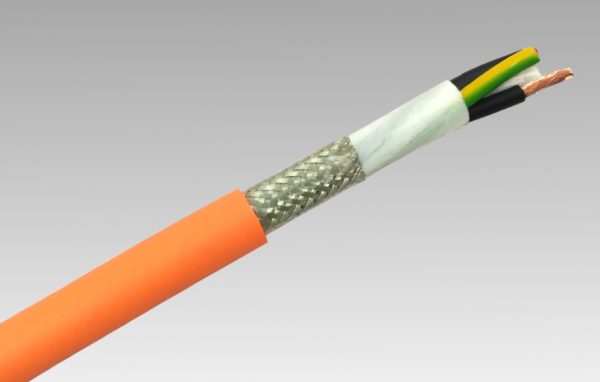
The difference lies in one layer: a shielded cable includes a metallic shield between the conductor insulation and the outer sheath. This shield acts like a Faraday cage: it blocks external electromagnetic interference and prevents the cable itself from emitting interference towards other equipment.
An unshielded cable does not have this layer. It is simpler, lighter, easier to install and, generally, more economical. In environments without significant electromagnetic noise, it works perfectly.
Think of it this way: shielding is like double glazing on a window. In a quiet neighbourhood, you do not need it. On a busy street, it makes all the difference.
When is an unshielded cable enough?
An unshielded cable is the right choice for installations where the electromagnetic environment is clean.
Use it when:
- The installation is domestic or office-based, with no nearby electrical machinery.
- You need local data networks, such as Ethernet or LAN, in non-industrial buildings.
- Distances are short and the equipment is low-power.
- There are no sources of electrical noise in the environment.
- The budget is tight and the environment allows it.
The most common example is UTP cable, or Unshielded Twisted Pair. It is used every day in millions of network installations without any problem because, in those environments, shielding is not necessary.
When do you absolutely need a shielded cable?
In industrial environments, there are sources of electromagnetic noise everywhere:
- Electric motors and variable frequency drives
- Transformers and high-voltage panels
- Welding machines and induction equipment
- Radiofrequency equipment
- Fluorescent lighting systems
- Nearby power lines
All this noise can enter an unshielded cable and cause serious problems:
- Data transmission errors
- False signals in sensors and actuators
- Malfunctions in control systems, such as PLCs and HMIs
- Unexpected production stoppages
- Corrupted data in industrial communication buses
In these cases, shielding is not optional: variable frequency drives, 4-20 mA analogue signals, industrial buses such as PROFIBUS, Modbus, CANbus and RS-485, and precision instrumentation always require shielded cable.
Types of shielding: which one is right?
Not all shielded cables are the same. Depending on the application and the level of interference, you will need one type of shield or another.
Copper braid
A woven mesh made of fine copper wires that covers the conductors. It is the most common type of shielding in industrial installations.
Advantages
- Excellent protection against low- and medium-frequency interference
- High mechanical resistance and flexibility
- Easy grounding
- Typical coverage of 60% to 85%
When to use it
- Installations with PLCs and control systems
- Industrial robots and automation
- Environments with vibration or frequent movement
Aluminium-polyester foil
An aluminium tape applied helically with a minimum overlap of 25%. It provides 100% coverage.
Advantages
- Total coverage: no point is left unprotected
- Very effective against high-frequency interference
- Lighter and more economical than braid
When to use it
- Digital data transmission
- Instrumentation cables where weight and diameter matter
- Applications with radiofrequency interference
Combined shield: foil + braid
The best of both worlds: aluminium foil on the inside and copper braid on the outside. Maximum protection.
Advantages
- Superior protection across the entire frequency spectrum
- Ideal for electromagnetically hostile environments
- Greater mechanical durability
When to use it
- Variable frequency drives (VFD)
- Environments with multiple simultaneous sources of noise
- Critical applications where failure is not an option
Individual shielding per pair
Each pair of conductors has its own shield, in addition to the cable’s overall shield. This eliminates crosstalk between signals.
Advantages
- Autonomy for each pair
- Maximum immunity between independent channels
- Ideal for multiple analogue signals in the same cable
- Prevents internal interference between pairs
When to use it
- Instrumentation systems with multiple sensors
- Applications where each pair carries different information
- High-demand industrial data networks
Grounding: the step you cannot skip
Here is something many people overlook: a shield without a ground connection is useless. In fact, it can even make the problem worse by becoming an antenna that picks up more noise than it blocks.
General rule: connect it at one end only
For signal and control cables, the shield is connected to ground at only one end, usually on the receiving equipment side or at the control panel.
If you connect both ends to ground, you can create a ground loop. Potential differences between the two points will create currents that circulate through the shield and generate the very noise you were trying to avoid.
Exception: power cables and variable frequency drives
In this case, the shield should be connected at both ends, because the noise levels are so high that maximum drainage of parasitic currents is required.
The drain wire: your best ally
Many Cervi cables include a drain wire: a thin conductor that runs alongside the shield and makes grounding much easier. Without having to strip the braid or work with the foil, you connect the wire directly to the earth terminal. Fast, clean and simple.
Cervi cable range: shielded and unshielded
CERVITRONIC — Instrumentation and data transmission (250 V)
- LiYCY 250V: flexible shielded cable with tinned copper braid
- PAR POS 250V: twisted pairs with individual and overall shielding
- LiYY 250V: flexible unshielded cable for clean environments
CERVIFLEX — Fixed installation and control (300/500 V)
- RC4V-K: shielded with copper braid
- VC4V-K: economical shielded version
- YSLCY-JZ / -OZ: oil-resistant shielded cable
- VV-F / YY: unshielded versions for conventional installations
CERVIFLAM — Halogen-free cables (LSHF)
- RC4Z1-K: shielded LSHF cable
- Z1C4Z1-K: shielded multipolar cable
- Z1C4Z1-K (AS): high-safety cable for public-access locations
CERVICOM — Communication cables
- U/UTP: unshielded cable for data networks in environments without interference
- F/UTP: overall shield made of aluminium/polyester tape
- SF/UTP: double shield with foil + braid for more demanding environments
Frequently asked questions (FAQs)
Is an unshielded cable lower quality than a shielded cable?
No. The quality of a cable does not depend on whether it has a shield or not, but on whether it is properly manufactured and suitable for the application.
Can I replace a shielded cable with an unshielded one to save costs?
In industrial environments or where there are sources of interference, no. The initial saving can turn into failures, production stoppages and diagnostic and repair costs far higher than the price of the correct cable.
When should I connect the shield at one end and when at both ends?
For signal and control cables, connect it at only one end to avoid ground loops. For power cables with variable frequency drives, connect it at both ends. If you are unsure, contact us before installation: poor grounding can be worse than no grounding at all.
How long does a properly installed shielded cable last?
Under normal industrial installation conditions, more than 20–25 years. The key is choosing the right cable for the environment, including temperature, chemical exposure and flexibility, and carrying out the installation carefully. A good cable installed badly will not last as long as it should.
Do you have doubts about which cable you need for your installation?
At Cervi, we help you choose the right cable according to the environment, the level of interference, the application and the technical requirements of your project. We offer a wide range of shielded and unshielded cables for industrial installations, automation, instrumentation, communications and public-access environments.
Contact us and we will advise you to find the safest, most efficient solution tailored to your needs.